

With the help of generous donations, Easton Legacy Fund aims to help Easton not-for-profits support and give back to the town through various projects.
Below, we highlight not-for-profits who are currently making a difference in Easton and who we feel are strong considerations for Legacy Fund grants in the future: Natural Resources Trust (Sheep Pasture), Ames Free Library, House of Possibilities, Oakes Ames Memorial Hall, Children’s Museum Easton, Easton Garden Club, Frothingham Park, Easton Historical Society & Museum, Easton Community Access Television (ECAT), Governor Ames Estate, and Old Colony YMCA.
House of Possibilities (HOPe)
350 Washington Street, North Easton | Visit Site
At the Start
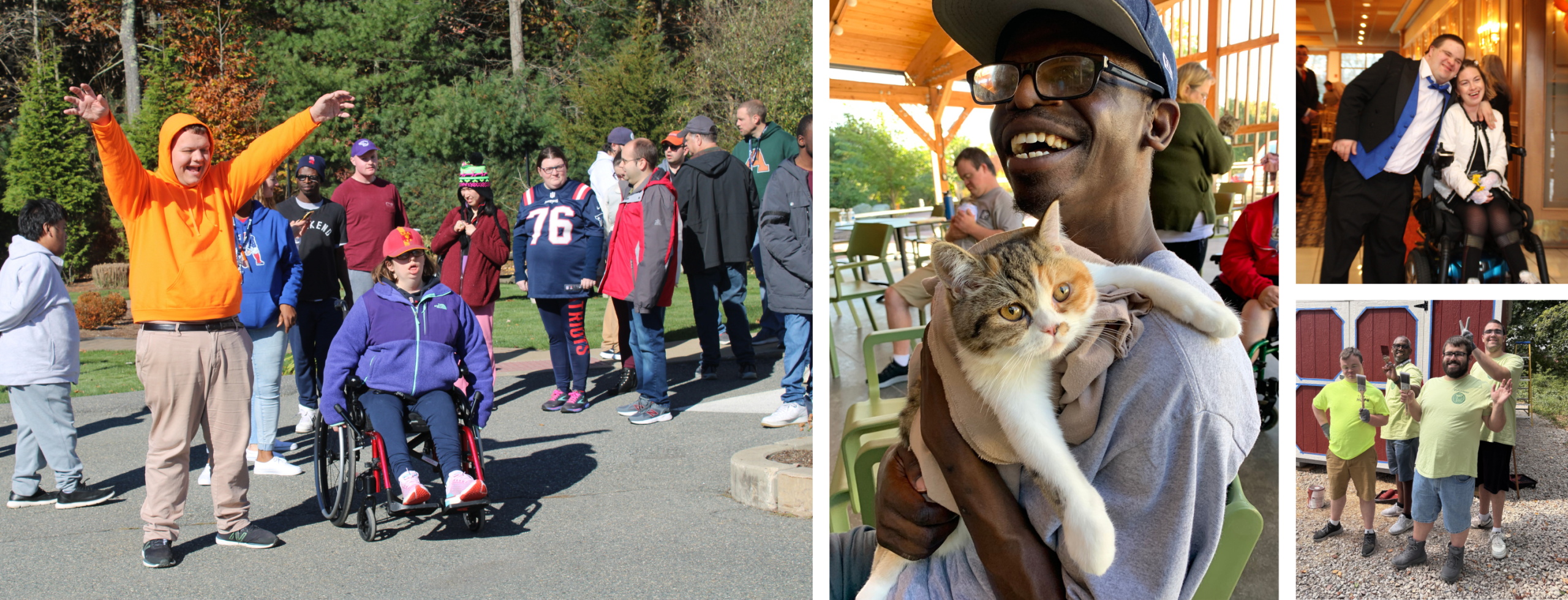
HOPe began with a powerful vision: provide families caring for a child with disabilities with much-needed respite. This vision, fueled by collaboration with Stonehill College and the Yawkey Foundation, culminated in HOPe’s opening in 2009 and it has grown since to include a day program, and coaching and college navigation services as well as social and recreational activities for children, teens, and adults.
Today
HOPe operates 24/7, and every year, nearly 300 families from over 60 Massachusetts communities find support and connection at HOPe. All of HOPe’s programs inspire children and adults to appreciate their abilities and instill a determination to exceed the expectations of their disabilities. Its pathways to employment program for adult members has a 31% workforce participation rate, high for people with disabilities.
A Major Expansion for a Growing Community
If you’ve driven past the Stonehill campus recently, you’ve seen the construction activity at HOPe. The organization is in the midst of a transformational expansion — doubling its program space with a new 15,000squarefoot building and a full renovation of its existing 11,000squarefoot home.
When the project is completed in the summer of 2026, HOPe members will have on campus access to a commercial training kitchen, flexible community and gathering spaces, an art and design studio, a rotational jobs lab (the employers training there change every few years) a music and recording studio.
During its year of construction disruption, HOPe kept its 300 members fully engaged by securing alternative spaces and maintaining uninterrupted programming — an impressive feat that speaks to the ingenuity and dedication of its staff and volunteers.
HOPe Members Contribute Across Easton
HOPe’s connection to Easton begins with Stonehill College, whose partnership has
been central since the organization’s founding. HOPe’s campus sits on Stonehill land, and the college’s Roche Dining Hall as well as other Stonehill venues provide meaningful volunteer opportunities for HOPe members. More than 70 Stonehill students volunteer with HOPe each year.
Across Easton, HOPe members also contribute through volunteer opportunities with HOPe’s Easton partners, including: My Brother’s Keeper, Holy Cross Retreat House, Unity Church, Natural Resources Trust of Easton, First Parish Church.
These relationships give HOPe members a chance to build skills, confidence, and community connections, all of which are core objectives of HOPe’s mission.
Easton Organizations Supporting HOPe
Other Easton groups have supported HOPe’s mission by sponsoring programs, and events for HOPe members. They include: The Art Coop, Bank of Easton, Easton Charitable Fund, Easton Garden Club, Easton Wings of Hope, Easton Women of Today, the Town of Easton Recreation Department, Blanche Ames School.
Together, these organizations help expand what’s possible for HOPe members — and strengthen Easton’s commitment to inclusion and belonging.
Why It Matters
HOPe’s work changes lives. Its programs give hundreds of families a place where their children and adults can learn, grow, and thrive. And its deep partnerships across Easton show how a community becomes stronger when everyone is included.
Easton Youth Baseball League (EYBL)
Militia Park | Mahoney Road, North Easton | Visit Site
Keeping Easton’s Kids Active, Confident, and Connected
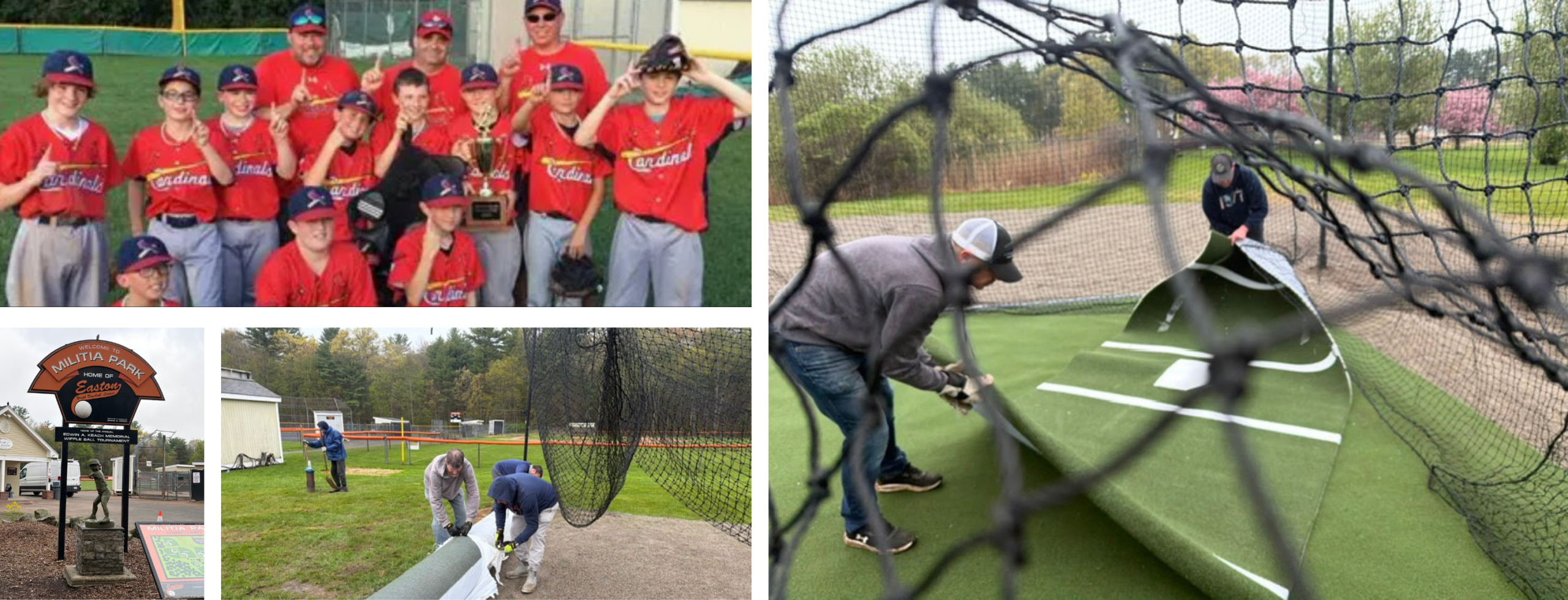
For more than three decades, the Easton Youth Baseball League (EYBL) has been one of the town’s most joyful constants—a place where kids learn the game, make friends, and feel the pride of belonging to something bigger than themselves. Run entirely by dedicated volunteers, EYBL is a not-for-profit that reflects Easton at its best: neighbors stepping up for neighbors, families building community together, and children discovering their strengths in a safe, encouraging environment.
Who EYBL Serves | A Program for Every Age and Ability
Each year, hundreds of Easton families participate in EYBL’s spring and fall programs. The league welcomes players from age five through high school, offering divisions that grow with them—from Instructional and Farm to Minors, Majors, and Babe Ruth. Every child is supported, whether they’re picking up a glove for the first time or competing at a higher level. And thanks to confidential financial assistance, no child is ever turned away.
What the League Offers | Skills, Sportsmanship, and Lifelong Memories
EYBL’s home fields at Militia Park come alive each season with practices, games, clinics, and community events. Kids learn fundamentals, teamwork, and
resilience—skills that matter long after the last out. Older players enjoy competitive play, while younger ones experience the pure joy of learning the game in a supportive, low-pressure setting. Special events, like “EYBL Day at Stonehill Baseball,” connect Easton’s youth with local college athletes and role models.
Leadership and Volunteer Power | The People Who Make It All Possible
The league thrives because of leaders who give their time, energy, and heart. Kevin Bowles, Bryan Abramoske, and a committed board of volunteers manage everything from scheduling and coaching to equipment, safety, and field maintenance. Their work—often behind the scenes—keeps the league running smoothly and ensures every child has a positive experience. As volunteer numbers have declined in recent years, these leaders have stepped up even more, carrying a growing workload to keep the tradition strong.
Why EYBL Matters to Easton | Strengthening Community, One Season at a Time
Youth baseball is more than a sport in Easton—it’s a shared ritual that brings families together, builds friendships, and strengthens the fabric of the town. The league teaches confidence, belonging, and responsibility. It gives kids a place to grow, and it gives parents a place to connect. In a community that values history, tradition, and civic life, EYBL is a living example of how volunteer-driven organizations enrich the quality of life for everyone.
Natural Resources Trust of Easton
307 Main Street, North Easton | Visit Site
It is the mission of the Natural Resources Trust of Easton (NRT), located in North Easton, MA, to educate about significant natural and cultural resources and to acquire and preserve land of special character for the benefit of the public. The NRT promotes a land ethic in the community through educational programming and provides leadership, cooperation, and networking to others with similar missions. The NRT began in 1967 as a grassroots, citizen-led organization to protect land of special environmental, cultural, and community importance. Since then the NRT has grown into an organization which protects over 300 acres of land within Easton through direct ownership and oversight of formal conservation restrictions. NRT’s flagship public land is Sheep Pasture, a 154-acre conservation property that hosts NRT’s model farm, class buildings, offices, community gardens, and equipment and has been a critical resource for outdoor recreation within the Town of Easton for over 50 years.
The NRT operates its Sheep Pasture property with the primary goal of having the land available to all individuals on a daily basis, free of charge, to allow for personal health, family recreation, and emotional wellness. The public has access to Sheep Pasture’s extensive trail system, resident farm animals, wildlife, and open spaces throughout the year for jogging, hiking, biking, picnicking, birding, dog walking and other outdoor activities. Sheep Pasture is also the education site for over 6,000 students ranging from kindergarten through high school from Easton, Brockton, Stoughton, and other surrounding cities and towns, who come to participate in NRT’s high-quality environmental education programs. Education topics vary and include focuses in the life sciences,
ecology, biology, agriculture, geology and other related areas. Furthermore, NRT offers summer camp programs and dozens of other educational activities to families and individuals throughout the year. In addition to educational programs, NRT hosts special seasonal events at Sheep Pasture, such as the annual Harvest and Craft Fair and Spring Farm Festival, both of which draw thousands of visitors for wonderful outdoor celebrations of community. Sheep Pasture also features NRT’s Community Gardens, where individuals, families, and local community groups have been maintaining vegetable and flower gardens for over 40 years.
Looking ahead to the future, NRT’s goals are to enhance the Sheep Pasture visitor experience; increase accessibility for visitors and program participants; and provide the benefits of time spent outdoors to new, diverse audiences. To accomplish these goals and maintain the Sheep Pasture property as a critical outdoor community resource, NRT plans to continue making ongoing repairs and upgrades to its facilities and complete exciting new building projects. NRT will also look to adapt Sheep Pasture walking trails and other areas to increase accessibility for individuals of all abilities, ages, and comfort levels to better accommodate the needs of visitors and program participants. Lastly, NRT understands the importance and benefits of spending time in nature and would like to expand its outreach to continue bringing new and diverse audiences to the Sheep Pasture property.

NRT Harvest Fair
The NRT of Easton: Non-profit partnerships for the good of the community
Non-profit organizations throughout Easton provide important benefits to the community that allow the town to be a wonderful place to live for all. The NRT of Easton, itself a 501(c)(3) non-profit organization, works hard to provide those benefits to the community, and showcase other non-profits from our area as well. The largest of these partnership opportunities is the NRT’s annual Harvest and Craft Fair is held each October.
Now in its 51st year, the fair is one of the largest and most anticipated community events in Easton and it is attended by thousands of visitors each year. As part of its commitment to all non-profit organizations, the NRT provides free booth spaces to many non-profit organizations, allowing them to share their own group’s information with Harvest Fair guests. This ability to showcase so many non-profits in the community benefits not only the organizations who share their message but also guests who learn about the good work going on in their own communities every day.
Partnerships between non-profit organizations, as well as with the greater community, are vital to the success of each and every non-profit and the betterment of life in our area. The NRT of Easton is proud to be able to play a role in the success of local non-profits and the Easton community as a whole.

The Ames Free Library
53 Main Street, North Easton | Visit Site
The Ames Free Library is one of Oliver Ames, Jr.’s lasting gifts to the people of Easton. Established by a gift from Ames in 1877, built by the renowned H.H. Richardson, and opened in 1883, the Library has been a landmark site on Main Street for nearly 150 years. In addition to
providing standard (and some innovative!) library services to our community, the building represents a historical and architectural destination for people from throughout New England and beyond. The library has twice been recognized as a finalist for the “Best Small Library in
America,” a national award designated to showcase outstanding service to populations of 25,000 or less.
The William Hadwen Ames Memorial Room was opened as the children’s room in 1931, which was quite forward-thinking at a time when children were only beginning to be welcomed into libraries. The bright and spacious room still serves as home to our Youth Services department, serving families and children from birth through the early teen years. Also part of our library campus, the Queset House (1854) and Queset Garden provide extra space, indoor and out, for library programming, community meetings and events, and anyone seeking a leisurely place to read, study, or chat. Over 60,000 patrons visited the library last year, with another 21,000 stopping by the Queset House.
The Ames Free Library’s motto is: Where the Community Connects. We provide materials and services to help the residents of Easton obtain information to meet their personal, educational, professional, and recreational needs. Emphasis is placed upon supporting students of all ages, particularly stimulating younger children’s interest and appreciation for reading and learning. The library serves as a learning and educational center for all residents of the community. Increasingly, these community needs are met using our computers, wi-fi connection, and online resources.
In addition to providing free materials, free access to technology, and free spaces to gather, the library focuses heavily on community engagement in the form of events, programs, and workshops. Last year, the library hosted over 1,200 programs, attracting nearly 11,700 participants! We host year-round book clubs and storytimes, and feature seasonal programming for adults, teens, and children. The annual Summer Reading Program is our most impactful program; we challenge readers (and listeners) of all ages to continue reading and learning through the summer months, and patrons who participate are eligible for small incentive prizes and raffle items. We also bring in cultural programs and performances for all age groups throughout the year.
Functioning in historic buildings does come with its challenges. Both the Library and the Queset House are frequently in need of ongoing physical maintenance, large (leaky roofs) and small (outdoor light fixtures). Moving forward, we need to upgrade both buildings’ IT infrastructure. Additionally, we hope to continue providing the programs that our patrons enjoy each summer.

Bill Ames
Ames Free Library Board Member
My tenure on the library board is now 46 years. In 1977 I replaced Bill Parker on the board. He was married to my cousin Elise Ames whose great-grandfather Oliver Ames (1807-1877) donated the library. My father and mother David and Elizabeth were both on the board. My father had been president since 1955. My mother was on the board for over 50 years. Amazing indeed. We met in the basement under the Children’s Room. It was unimproved with mold everywhere. The ceiling was low and the lighting was minimal — a long way from today’s brightly painted area. Back in those days, the board met quarterly. Until the 1960s, the librarian did not attend the meetings. The librarian would type up her report and submit it for the board’s discussion. The addition of the Children’s Wing was in 1931 and because of its large size has never needed improvements. Until recent years parking for the patrons was on the street. Seems incredible but there were never any real accidents. When you wanted a book, you submitted a form to the librarian and she would get it for you. I was elected president in 1982 and served for several years whereupon Ed White took over as part of the evolution from a private library to a quasi-public configuration. This evolution included providing the staff with better pay and expanding the facilities. The board became very active in making it all happen. I am on the Building and Endowment Committee whose function is to look after the Buildings, Landscape, and, most of all, the Endowments which the library is fortunate to possess. In 2009 we purchased Queset House located on the north side of our property line. This purchase was important because we had been long thwarted in our plans to expand the library building. A difficult experience but our struggle had a very happy ending with its purchase. In addition, we became the owners of the Queset Garden located between the two buildings. Both of these properties have become successful for the library well indeed beyond our fondest dreams. Lastly, we are very proud that along the way the library was twice a finalist in the Best Small Town Library in American competition. It has been quite a journey for our talented staff as well as for the board.

House of Possibilities
350 Washington Street, North Easton | Visit Site
House of Possibilities (HOPe) empowers children, adults, and families facing disabilities. We offer a supportive community that fosters growth and achievement, a stark contrast to institutional settings. Our innovative programs, along with dedicated advocacy, unlock potential and pave the way for fulfilling lives. HOPe’s began with a powerful vision: provide families with much-needed respite. Founded by parents
understanding the immense challenges of caring for a child with disabilities, they recognized the critical role of support for overall family well-being. Respite lessens the risk of burnout, depression, and family strain.
This vision, fueled by collaboration with Stonehill College and the Yawkey Foundation, culminated in HOPe’s opening in 2009 and has grown to include additional services. Children, teens, and adults now enjoy social and recreational activities. Adults benefit from programs like overnight respite, career development, and support for young adults with Autism transitioning to college.
HOPe operates 24/7 from its welcoming, 11,000-square-foot House on Stonehill College’s campus. Every year, nearly 300 families from over 60 Massachusetts communities find support and connection at HOPe. Our tagline, “See What Belonging Can Do,” reflects the core of our mission. HOPe is more than a program; it’s a second family for children and adults with disabilities, and their caregivers. At HOPe, members gain skills, confidence, and most importantly, a sense of belonging.
This feeling of community extends beyond HOPe’s walls. We’ve fostered over 50 partnerships across Easton and nearby areas. These collaborations create opportunities for our members to volunteer in the community with organizations like My Brother’s Keeper, Community Servings and many more. Alongside the Easton Recreation Department, we co-host fun events like Karaoke Night and Bocce. Members’ artwork finds a home in the Ames Free Library, and the Bank of Easton offers financial literacy workshops for our members.
HOPe’s integration with Easton benefits everyone. Volunteering combats disability bias, exposes members to local activities and career options, and strengthens the community’s inclusivity.
All of our programs inspire children and adults to appreciate their abilities and instill a determination to exceed the expectations of their disabilities. HOPe has the only children’s non-emergency Overnight Respite Program in Massachusetts, offering over 20,000 hours of respite annually. Our pathways to employment program for adults has a 31% workforce participation rate, exceeding the state average for people with disabilities. HOPe fosters
a spirit of service. Over 80 dedicated volunteers from Stonehill College and Northeastern University contribute their time weekly. Our members, in turn, give back to the community, logging over 300 volunteer hours each month.
The need for disability services is immense, with thousands of Massachusetts residents on waiting lists. Unfortunately, HOPe faces a similar challenge, currently at capacity and unable to serve everyone who needs us.
We are exploring plans for a facility expansion, tripling our program space! This ambitious project will allow us to help far more families and individuals with disabilities.
To make this vision a reality, we will need to rely on the incredible support of our community partners and donors. Together, we can build a more inclusive future for all.

Oakes Ames Memorial Hall
3 Barrows Street, North Easton | Visit Site
Oakes Ames Memorial Hall, a National Historic Landmark building, constructed in 1879-81, is one of five buildings in the town designed by architect Henry Hobson Richardson. In an 1885 poll of architects, it was ranked as one of America’s ten best 19th-century buildings. On November 14, 1881, the Memorial Hall was sold by Oakes’ children, Oakes Angier and Oliver III, for one dollar to the Oakes Ames Memorial Hall Association, Inc. The building was to be held in trust by the Association for the benefit of the “Inhabitants of Easton.” On March 4th, 1882, the town meeting voted to accept the gift according to the donors’ terms of the gift to be held in trust, managed by the Association, and maintained by the town.
Although the building was referred to as the “Town Hall”, it was not designed for municipal departmental offices. The Hall’s large open rooms were designed to be used just as they are today, as gathering places for meetings, lectures, performances, and public discussions. The Association has two roles to balance; one is maintaining the historic building, and we thank Easton’s Community Preservation for their generous funding of recent major capital projects. Approximately 15% of gross revenue each year is forgone for discounts, as the Association helps local non-profits and residents with discounted rental rates for the use of their facilities. The other role is to promote cultural tourism, and for that, they are upgrading the facilities they offer. The first step was renovating the upstairs stage by replacing the fifty-five-year asbestos stage curtains. A much-appreciated gift from the Easton Legacy Fund helped get their fundraising for that “over the top” and enabled them to take that first step.
The town has free use of the Hall for municipal events and meetings. The Hall plays an important role as a venue for community and family activities, drawing people from in and out of Easton to revitalize North Easton’s Main Street. Many of the activities relate to our new role as the performance and event center of the Easton Shovel Town Cultural District. This program is part of the Commonwealth’s Downtown Revitalization Program. The Massachusetts Cultural Council provides funding to the Cultural District to sponsor the Summer Music Series Concerts which consists of seven outdoor evening concerts on Wednesdays from July to September. Held on the Hall’s front steps they are becoming increasingly popular. On Sunday, September 17th a music festival sponsored by the District capped off the 2023 Summer Series with five bands performing on three stages. To provide room for the larger crowd, Main Street and Barrows Street in front of the Hall were closed to traffic. The festival attracted over 900 people. From October to May the Hall hosts popular indoor concerts every two to three months in its upstairs room, an attractive space that seats over 200 people, has stained glass windows, and a twenty foot high ceiling.
The Hall hosts approximately 145 events and around 10,000 visitors annually. It is or has been a venue for concerts, plays, dances, weddings and wedding receptions, anniversary parties, bar mitzvahs, family reunions, art exhibitions, town of Easton committee meetings (free), the Easton Holiday festival (for 40+ years), winter farmer’s market, the library’s children’s summer program, church services, music recitals, Boy Scouts meetings (free), Red Cross blood drives (free), yoga classes, and various other events.

Children’s Museum Easton
9 Sullivan Avenue, North Easton | 508-230-3789 | Visit Site
Children’s Museum Easton (CME) is a vibrant, educational, experiential, and cultural community asset. Our mission is to inspire young children, their families, and caregivers to become lifelong learners, no matter the economic circumstances of our visitors. We focus on early learning and discovery for children ages 1 – 7. The Museum is housed on three floors in a 117-year-old firehouse, with a safe, fenced outdoor learning space, offering affordable, high-quality exhibits, programs (STEAM), classes (music, science, art, yoga), field trips, and special events. CME designs programs to meet MA Curriculum Frameworks. We also offer in-person and virtual outreach programs to schools, libraries, and community centers.
Two programs that are the essence of learning at CME are our STEAM Lab and MakerSpace. STEAM education incorporates science, technology, engineering, art, and mathematics when teaching and working with children. Although these topics seem advanced and complex, STEAM education provides early exposure to these subjects and helps build a strong foundation for future learning. OurMakerSpace is an invitation for young children to explore a variety of materials and to create something only they can imagine. Children have opportunities to take ownership of their learning and exploration. In Makerspace, they begin to see themselves as creators and inventors.
For young children, mastering language and analytical skills accompanies budding creativity to build pretend worlds in which they can engage each other. In our STEAM Lab and Makerspace, they use their words, movement, and imagination to solve problems, explain their ideas, and compromise. Young children are naturally curious, and as they are exposed to new things, they become more involved in learning experiences that excite them, expand their literacy, and develop a deeper understanding of how the world around them works.
In the future, we want to create an exhibit space that allows children to investigate the undersea landscape’s science, language, and art with its marvelous creatures and plant life. At CME, we never stop imagining how to inspire and motivate our young visitors.

CME Father’s Day Road Race
Since 1994, the Children’s Museum Easton has hosted its annual Father’s Day Road Race, a beloved community event. Now in its 28th year, the race has become a cherished tradition for many families.
Initially a 5-mile event attracting serious runners, the race expanded to foster a more inclusive atmosphere. The Museum introduced the Family Fun Walk, allowing everyone to join the festivities regardless of running ability. This commitment to inclusivity led to transforming the race into a 5K. Over the years, the routes have also changed. The Museum was granted permission to run on private land, part of the Ames family estate for a few years. The current route starts at the top of Sullivan Avenue, heads down Center Street, loops around the school complex, winds through neighborhoods, and finishes in front of the Museum. Neighbors along the route set up chairs to cheer the runners, and on hot mornings, some even offer a cooling spray from a garden hose. It’s common to see parents and kids running together or dads pushing their little ones in strollers, embodying the spirit of the day. Family members and friends, many holding signs and blowing horns, gather at the finish line.
In recent years, there has been a surge in participation from young athletes, particularly those from area school running clubs. Local sports centers and businesses have also become actively involved, bringing teams that contribute to the race’s competitive and friendly spirit. There are multiple categories for the runners: Novice (15 and under), Junior (16 to 19), Open (20 to 29), Sub Masters (30 to 39), Masters (40 to 49), Seniors (50 to 59), Super Seniors (60 to 69), and Savvy Seniors (70 and up). Cash prizes are awarded to the first three overall male and female finishers, with first place receiving $300, second place $200, and third place $100. A commemorative prize is awarded to the first three finishers, male and female, in each age category.
Attracting about 350 runners each year, the race is a major fundraiser for the Museum, with all proceeds going towards programming, outreach, and exhibits. It’s this hometown community spirit that makes the Father’s Day 5K special and holds a unique place in the hearts of many.

Easton Garden Club
15 Barrows Street, North Easton | Visit Site
EGC uses its mission statement, “the objective of the club shall be to advance and to encourage the study of horticulture, floriculture, and landscape architecture; to encourage the education of gardening and the protection and conservation of natural resources; and to promote civic beauty and roadside improvement”, to guide the positive impacts they have in the community. We encourage and support native-style gardens that support the many different species of birds, bees, and insects, which are vital to our ecosystems.
Money raised at the annual plant sales along with the Holiday Wreath and Greens sale, provides annual scholarships to Easton students in their pursuit of higher education in related fields. The monthly club meetings offer presentations and workshops to promote, encourage, and support education and “best practices” amongst its members. Our civic beautification projects bring smiles to passersby. A bounty of daffodils on a dreary spring day is a true crowd-pleaser! Next time you are at the Town Offices, take a moment to enjoy one of our newest planting – five hundred plus daffodils
along the driveway.
EGC is especially proud of being able to help students achieve their educational dreams; our work with a broad section of the community, from children through senior citizens, to enliven their day; and our partnerships with other community groups that benefit the town. For example, we work with the library to present Books in Bloom each fall.
Easton Garden Club is attracting new members every month. This is especially important to the health, and growth of the club. Continuing to attract new members is one of our priorities to secure the club’s future. Climate change is affecting our lives and our gardens. The need to educate everyone in the community on how to cope with these changes is paramount in the coming months and years.
We welcome and encourage the public to attend an ECG meeting throughout the year. We hope you join us as a guest or a new member!

Frothingham Park
15 Park Street, North Easton | Visit Site
Frothingham Park was built in 1930 and dedicated by Mary Frothingham to honor her late husband Louis A. Frothingham.
The Park is privately owned but open to all in the Town of Easton to utilize. There is a baseball field, walking track, basketball court, tennis court and children’s play area. Over the 91 years of its existence, it has served as a recreational facility for the townspeople of Easton or just a place to come and enjoy the beauty and serenity of the Park.
For 92 years it has served the Town of Easton as a high school football field, competition track, baseball field for the high school and local baseball teams, basketball court, walking track, high school graduation facility, summer recreation facility for children, children’s play area, tennis courts with overlying pickle ball courts, civic events and events in conjunction with the Easton Recreation Commission and YMCA . There has been nothing constant about Frothingham Park except change to meet the everchanging needs of the townspeople of Easton. Arguably this is one of the important facilities in town that provides for all the townspeople and has had and continues to have a positive impact on the community at no cost to the Town of Easton.
The Park receives compliments on a regular basis for its beauty and condition. We are most proud of the up-to-date facilities. One of the most beautiful baseball fields and walking tracks along with a brand new basketball facility and two new tennis courts with overlying pickle ball courts allowing for two simultaneous tennis matches or four pickle ball matches. Our groundskeeper takes great pride in providing a clean and manicured facility.
Currently we are looking to provide a pavilion in the vicinity of the children’s play area that will allow shelter from sun or inclement weather and a place where parents and children could sit under cover and enjoy lunch or any number of activities on picnic tables under the roof of the pavilion. We are also looking to provide a smooth surfaced area for an outdoor work out facility with some equipment added.

Chuck Hurley
President of the Frothingham Memorial Corp.
I was intrigued by the invitation to become a Director and wondered how the Park operated, what I could bring to the table, what it meant to the citizens of Easton, and how it was funded. It took me nearly ten years to understand how the Park functioned. I guess I was a slow study.
I stayed on and constantly assessed what needed to be done and prioritized in my mind based on need and available funding what could be accomplished. I was also the new kid on the block and wanted to respect those Directors who were already in place. Operating from a trust fund meant that in good times we could accomplish more than in bad times and unless there was an overwhelming reason to withdraw money from the trust it was not to be touched.
The Park was nearly 60 years old when I got involved and much needed to be done from the standpoint of maintenance. I knew it could not be done all at once. It would have to be a gradual metamorphosis. I had to become creative about funding and involve the Town. CPA funding was a crucial component in renovating the Park facilities and proved to be the catalyst that moved the renovations ahead.
Much had changed over the years. The Park was a focal point for high school athletic activities which included football, baseball, and tennis. However, times have changed, and the Park facilities were only being used for high school baseball, as the new high school provided its own facilities for sports. I felt that if Mrs. Frothingham were here today, she would want the Park to meet the changing needs of the Town.
We added new children’s equipment, rebuilt all of the stone columns around the Park, repaired the fencing, removed structures that were no longer being used, leveled the track and made the surface more user-friendly, leveled the baseball field, and improved the infield, built new tennis ball and pickle ball courts, built a new basketball court, built a new storage shed, renovated the main shed, added a pavilion and most recently added a personal fitness facility.
My goal has always been maintenance-oriented. Get things fixed and up-to-date. Get the capital expenditures reduced to a minimum annually so the Park can be maintained and not continually seeking to fund capital expenditures. I am most proud of what the Directors and Park Superintendent have accomplished in making this Park a polished diamond, a resource for the community, and a place where townspeople can enjoy themselves as spectators or participants with the facilities we provide.
Going forward, I would like to see the same sort of philosophy employed to keep the Park beautiful, well-maintained, and adaptable to changing times.

Easton Historical Society and Museum
80 Mechanic Street, North Easton | Visit Site
In 1969, John S. Ames, Jr., David Ames, Senator Oliver F. Ames, and William Parker purchased the Old Colony Railroad Station built by Henry Hobson Richardson in 1883 and gifted it to the Society. The first Curator was Robert “Bob” Carpenter. The Society continued to flourish making significant contributions to the community (eg. establishing the Easton Historical Commission).
Over time, local historians like Margaret McEntee, Edmund Hands, Jeffrey Nystrum, Duncan Oliver, Hazel Varella, and Robert Brown created programs and publications that are still enjoyed to this day. During the 1980s, the collection grew, programs flourished and Paul Berry joined the team as Curator.
The mission of the Society is to preserve, promote, and interpret Easton’s unique industrial, social, cultural, architectural, and environmental history. Its goal is to foster interest in Easton’s rich history through educational events, published materials, and informative public exhibits. Recently, the Society has been led by Presidents Kenneth Michel, Frank Meninno (Curator from 2006 to 2022), and Deborah MacPhee. Their efforts along with the Board of Directors have secured the Society’s goodwill within the community, excellent research materials, and many successful exhibitions and programs.
The Society hosts monthly Open Houses focusing on different cultural aspects of Easton through artifacts, photographs, and ephemera. Most materials are from the Society’s own collections, but some are loaned by interested members. Recent exhibits include the Easton Little League’s 70th anniversary, Ames Plow Company Farming implements, and the history of the NRT.
Currently, the 1899 Morse Car is on permanent exhibit at the railroad station. It is one of only two remaining of the original 48 cars that were manufactured in Easton.
The Society’s Chowder and Chatter event funded by the generosity of the Avery Lee Williams family, features a panel of speakers on a wide range of Easton-centric topics.
Many of the same subjects appear in Reminiscences, the Society’s annual review of Easton’s history. Copies of its 13 volumes are available at the Society’s gift shop, along with books and mementos.
The Society’s current goal is to arrange, catalog, and house its collections in an accessible manner, and is in the process of securing funding to create a climate controlled archival space at the railroad station. The Society welcomes volunteers willing to help with preservation, archival, and cataloging. As always, the community’s support is appreciated as the Society continues to work towards its goals.

Hazel Varella
Longtime Member of the Easton Historical Society and Museum
Hazel Varella is one of them. Hazel has done many remarkable things in her life. She was an educator for an amazing 63 years, she has served on many important and diverse boards, both professional and community. Here, Hazel talks about her 56 years with the Easton Historical Society and Museum.
As a history teacher who has lived in Easton since 1945, and was a member of the graduating class of 1950, I have always believed that a person should be proud of, and contribute to, one’s community. As a young teenager, before coming to Easton, I helped my prior community, North Beverly, to clean up the parish center.
When I was hired by the Easton schools to teach history I wanted to challenge residents of Easton to learn more about the town’s history and uniqueness (Richardson, Olmsted, and the contributions of the Ames family).
I began a semester class, for OAHS seniors. Each weekend students were to become better acquainted with their neighborhood and share the information with their classmates on Monday. I also taught an evening class for adults with their “discovered” information. Bus tours for students and adults also occurred.
Because of my interest in Easton’s history, I was one of the group of 17 residents who brought back the Historical Society in the late 60s. It had been inactive since 1956.
I was very committed to the society from the beginning but what really made a difference to me was the 1969 gift of the Old Colony Railroad Station to the Historical Society by John, David, and Oliver Ames, and William A. Parker. After that, we had space for collections, exhibits, and events and I really wanted us to take advantage of that.
I am particularly proud of two things during my years at the Society. First, restoring the Railroad Station. It was not in good condition when we got it. It had been closed since 1960 and it took a lot of hard work from Society members to put it in shape before we could hold events there but we did it.
Second, the many things we did, and are still doing, to bring Easton history to residents. Some were fun, historically themed events like lectures and trips, and others I hope will have a more lasting impact. We distributed 100 copies of Chaffin’s excellent history of the town of Easton to schools and the library, and we created a successor volume bringing it up to date, for Easton’s 250th. And since 2010, we have produced the annual “reminiscences” series. Each issue is about 100 pages long and contains many interesting stories about old-time Easton and its residents. In addition, we supported many books produced by individual historical society members. Ed Hand’s wonderful 1995 “Neighborhoods of Easton”, and Jon Coe’s and Buddy Wooster’s 2018 “A Beautiful Image of Historic Easton” are a couple but there were many other good ones too.
Personally, I was very humbled when I was honored with a lifetime achievement award for my contributions and work with the society in May of this year. Many people including former students were there.
Going forward I think our volunteers will be what make the difference for the society. More than anything else I hope we continue to attract the energetic dedicated people that have been so important to our success.

Easton Community Access Television
50 Oliver Street, North Easton | Visit Site
Founded in 2010, Easton Community Access Television (ECAT) is a non-profit, multi-channel media organization with television production facilities located at 50 Oliver Street, Suite 201A in North Easton, Massachusetts.
ECAT is an educational resource and provider of community programming that helps residents, government, schools, and community organizations of Easton produce and share their stories and events with the worldwide Easton community.
ECAT’s mission is to develop and produce educational, cultural, and informational community programs for the Town of Easton and to provide an electronic forum for the free exchange of information and ideas that reflect the talents, interests, concerns, and diversity of its residents.
Moreover, ECAT produces a weekly half-hour news program, livestreams the town’s government boards and committees, covers many local events, and livestreams most home high school varsity sports games.
Easton residents and business owners are encouraged to create their own television programs and have their voices heard. Programs can be developed without the requirement of any technical skills.
ECAT provides free one-on-one training in all aspects of media production for all ages and provides week-long workshops on filmmaking for middle school students during school breaks.
ECAT holds two annual film festivals in our efforts to encourage creativity and to inspire an interest in media. The high school competition, the Hockomock Film Festival, encourages students to be creative, have fun, and work collaboratively to create unique films. After a panel of judges reviews the films and determines the winners, ECAT holds an awards ceremony featuring the winning films and their creators who receive cash prizes supplied by cultural councils and supportive individuals and businesses.
ECAT’s “Film Sprint” allows participants of all ages to work together to create films in the space of 48 hours with a randomly selected theme and prop. It is followed by a public gathering for a screening to celebrate the creativity of the Easton community.
ECAT’s programming is shared on four channels. Community events, concerts, and residents’ programs can be viewed on our Public Channel, Comcast 9, and Verizon 22. School events, concerts, sports, and the Oliver Ames High School News can be viewed on their Education Channel, Comcast 97, and Verizon 23. Live-streamed government board and committee meetings, live-streamed Town Meetings, and information relating to town government are on the Government Channel, Comcast 98, and Verizon 22. The Essentials Channel on Comcast 1072 and Verizon 2122 includes the highlights of our recent programs as well as original programs which the leadership believes are essential viewing.
Furthermore, all of ECAT’s channels can also be viewed live on their website, eastoncat.org. In addition, all of their programs are available on demand on eastoncat.org and YouTube.
ECAT is funded through cable franchise fees paid by Easton’s cable subscribers. Because each year more cable subscribers are canceling their subscriptions, ECAT is increasingly in need of community donations and financial support for its programs.
In the future ECAT’s vision is to modernize its main studio and podcast studio as well as government meeting sites to better facilitate productions that are both in-person and remote.
ECAT has seen increased demand for its programs especially with the changing media landscape post Covid.

Governor Ames Estate
A Property of the Trustees of Reservations
35 Oliver Street, North Easton | Visit Site
The Trustees mission is to preserve for public use and enjoyment places of exceptional scenic, historic, and ecological value in Massachusetts. At the Governor Oliver Ames Estate on Oliver Street in North Easton visitors have the opportunity to take a leisurely stroll and explore sweeping arboretum-style lawns, an elegant 19th-century stone stable, an agricultural field, meadows, a brook, garden pond, and other features. Residence of Easton and visitors from across the Commonwealth and beyond are invited to unfurl a blanket for a picnic with friends, examine the centuries-old trees dotting the property, and extend the day with side trips to the many shops, eateries, and organizations the comprise the Shovel Town Cultural District within walking distance to the Estate.
The Trustees are especially proud of their connections within the local community, and they sponsor or support a variety of Easton events. The Governor Ames Estate hosts the annual Legacy Festival in North Easton, it is part of the course for the YMCA’s 5k race, and it provides volunteer and recreational opportunities for the Easton Public Schools.
The Trustees are always looking for opportunities to increase its partnerships with members of the Easton community in order to provide additional public offerings to our visitors. We welcome the opportunity to forge deeper connections with Easton residents, businesses, and organizations, especially those who are our neighbors in North Easton. We are continually seeking support for on-going maintenance needs at the estate and are looking to grow our volunteer base to help us keep the grounds beautiful and welcoming to the public.

Old Colony YMCA
25 Elm Street, North Easton | 508-238-9758 | Visit Site
Old Colony YMCA is a charitable, non-profit Association committed to the development of a strong spirit, mind, and body, guided by Judeo-Christian principles, to enrich the quality of life for everyone in our communities. Guided by our core values of caring, honesty, respect, and responsibility, the Y is dedicated to giving people of all ages, backgrounds, and walks of life the opportunity to reach their full potential with dignity.
This Y is far from just a “gym and swim.” They offer several vital programs and services to the Easton community including; Waterwise – a drowning prevention, water safety program provided to all 2nd graders in the Easton Public Schools. Livestrong program- for cancer survivors to help build their confidence and strength. Inclusion programming– providing opportunities for ALL, despite physical or developmental needs. The Easton Y also proudly serves 62 families in their child care center and 211 families in our before and after school program and Summer Fun Club Camp.
That’s just the Easton Branch.
As an association, the Old Colony Y serves 31 communities in Massachusetts. In a typical year, they serve more than 140,000 individuals, and more than 70% of those are children. They are one of the largest human service providers in Southeastern Massachusetts and the largest childcare provider in the region. Over 50% of the programs and services provided to individuals and families are given due to the generosity of others. Just down the road from the Easton Y, they provide housing to 63 families experiencing homelessness including wrap-around services addressing food insecurity, mentoring program, mental health services, family stabilization and youth support programs- just to name a few.
Old Colony YMCA has been listening and responding to our communities most critical social needs since 1887. They continue to condemn systemic racism, bias, and discrimination of all kinds. When confronted with instances of injustice, they will address the root cause and commit to meaningful change. By building a culture of diversity, equality, and inclusion, they aim to ensure that our employees, our youth, our families, and our communities achieve equitable outcomes and live fulfilling, healthy lives. They know that when they work as one, they move people and communities forward.

Interested in making a donation? Click here to be taken to our donations page.
Stay tuned – more to come!